

 Login
Login
Streets ahead
A Victorian terrace in Birmingham becomes a living laboratory of ecological retrofit and community co-creation
Somehow, the housing crisis has a texture to it. Artex ceilings mummified in magnolia tones. Wooden architraves swollen into soft curves by layers of gloss. Blown PVC windows, their trickle vents jammed with dust, pollution. Laminate flooring bubbling underfoot. Tangles of cables stapled along the skirting. No fresh air moving through, the room shrink-wrapped in plastics and petrochemicals. Across Britain, ordinary terraces are quietly suffocating under layers of cheap renovation.
In one small terrace in Ladywood, Birmingham, those layers are being peeled away in public. “It’s been a rental for thirty years,” explains Immy Kaur of Civic Square, “with layers and layers of quick fixes.” During an open house week at Retrofit House, a living-room wall is cut clean through to the brick. Clay plasters are tried out in patches, wet and cool to the touch. On simple timber shelves in what was once a bedroom, samples of straw, lime, timber and tiles are laid out for anyone to pick up. Neighbours come through in twos and threes, bringing friends, kids, questions.
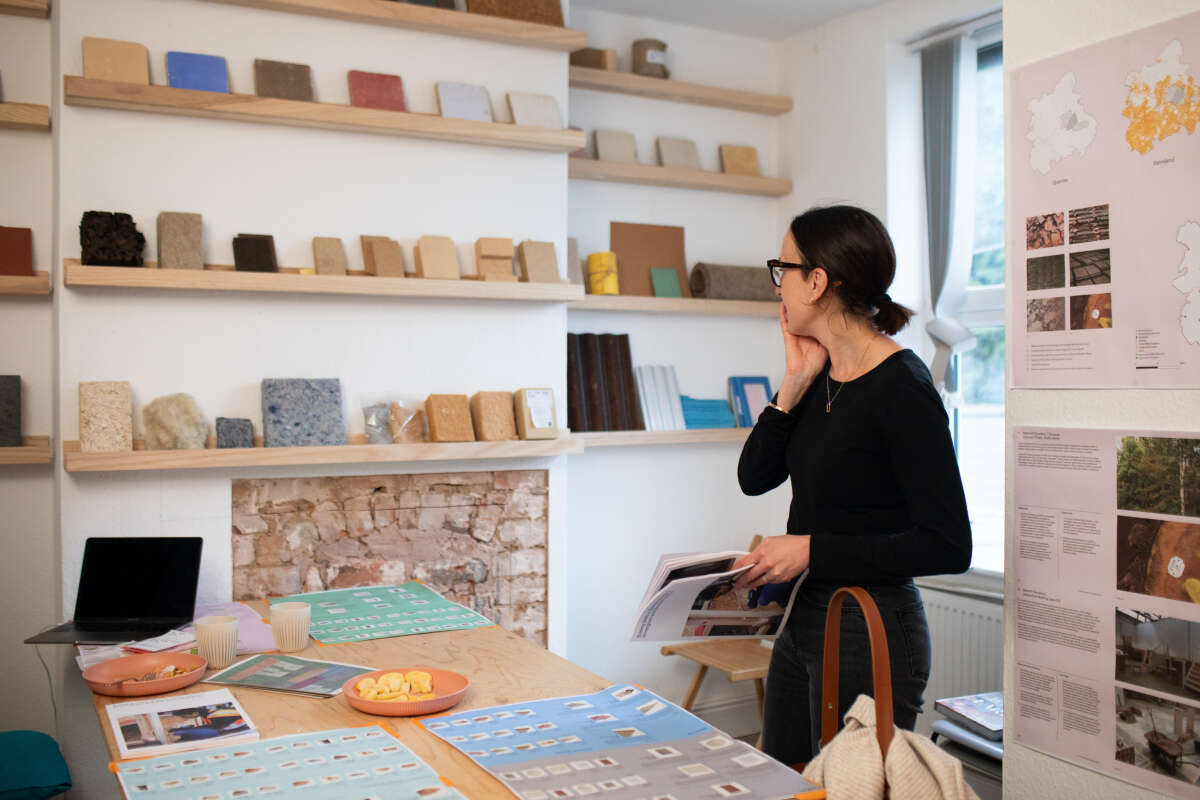 Timber shelves with samples. Image credit, Paul Stringer
Who is Civic Square?
Since 2020, Civic Square has been co-creating community initiatives in Birmingham – supper clubs, learning trips and a Neighbourhood Trade School – to put residents at the forefront of climate action. Retrofit House, opened to the public with a week of workshops in November 2025, is their latest step. Over six days, neighbours and visitors of all ages moved through clay and natural-paint workshops, ecoregional mapping exercises, story circles about housing and health, and design sessions imagining future streets and squares.
This public open house was intended to make the usually hidden processes of renovation visible and accessible. Material Cultures, Civic Square’s design partner, brings its research into bio-based construction and supply chains directly into the rooms, testing wall build-ups and finishes in situ. Dark Matter Labs sits alongside them, working on the legal, financial and data infrastructures that might let this kind of street-scale retrofit happen far beyond one Birmingham house. All of this forms part of Retrofit Reimagined, a growing movement of neighbourhood projects across the UK treating retrofit as a civic and cultural project as much as a technical one.
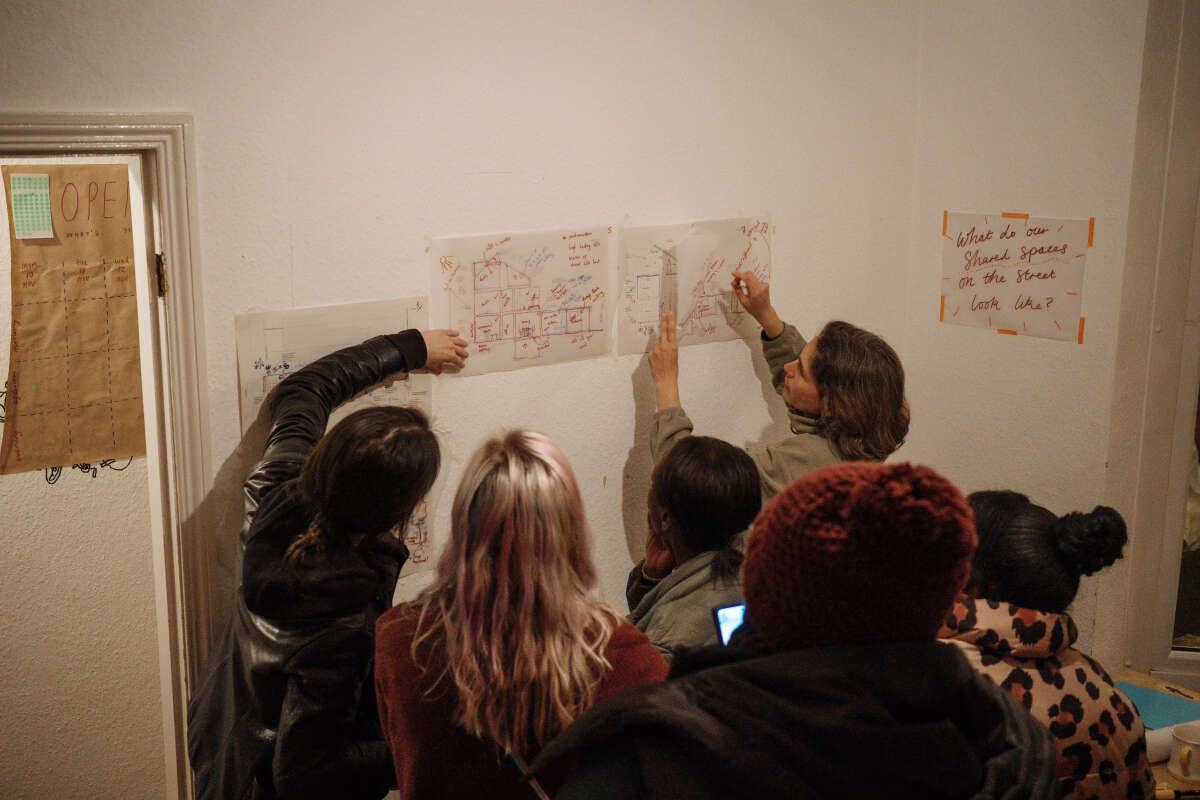 Participants looking at floorplans. Image courtesy of CIVIC SQUARE
At home
Retrofit House, explains Kaur, is “a live and open demonstrator working at the intersection of many, many different things; a typical Victorian terrace that we are using as a learning journey for the whole street.” The terrace was bought outright with philanthropic money, including the Joseph Rowntree Foundation’s Emerging Futures Fund. Immy explains that Civic Square has spent years lobbying wealth-holders and foundations to move money out of endowments and into community-held land and assets, with the aim that it will eventually sit in a Community Land Trust structure on truly affordable rents, with surpluses recycled back into the street. The house becomes a test bed for natural-material-based thermal retrofit in collaboration with Civic Square’s partners Material Cultures and Dark Matter Labs, an attempt to show how bio-based materials such as wood fibre insulation, straw and clay plasters might give a standard unloved terrace a low-carbon, breathable upgrade.
.jpg?s=1200&q=60) Participants at the front of the house. Image courtesy of CIVIC SQUARE
Participants at the front of the house. Image courtesy of CIVIC SQUARE
Throughout the week, the front door is propped open and the timetable shifts from quiet drop-in hours to packed workshops. One evening local trades run workshops on some of the complex hands-on details of retrofit; another afternoon, the front room hosts a teach-in on climate science and materiality, with neighbours passing round samples of insulation like bread at a dinner party. Upstairs, the loft becomes a clay studio where residents test plasters on boards and swap stories about damp bedrooms. There are sessions in the sitting room with housing officers and energy advisers, and round-table conversations with visitors from partner retrofit demonstrators.
Around each material, new relationships form: conversations about living spaces and health, shared experiences that are deeply personal but have somehow become universal as the housing crisis continues to bite. The house becomes less a case study and more a common project, a place where a neighbourhood practices building different walls together.
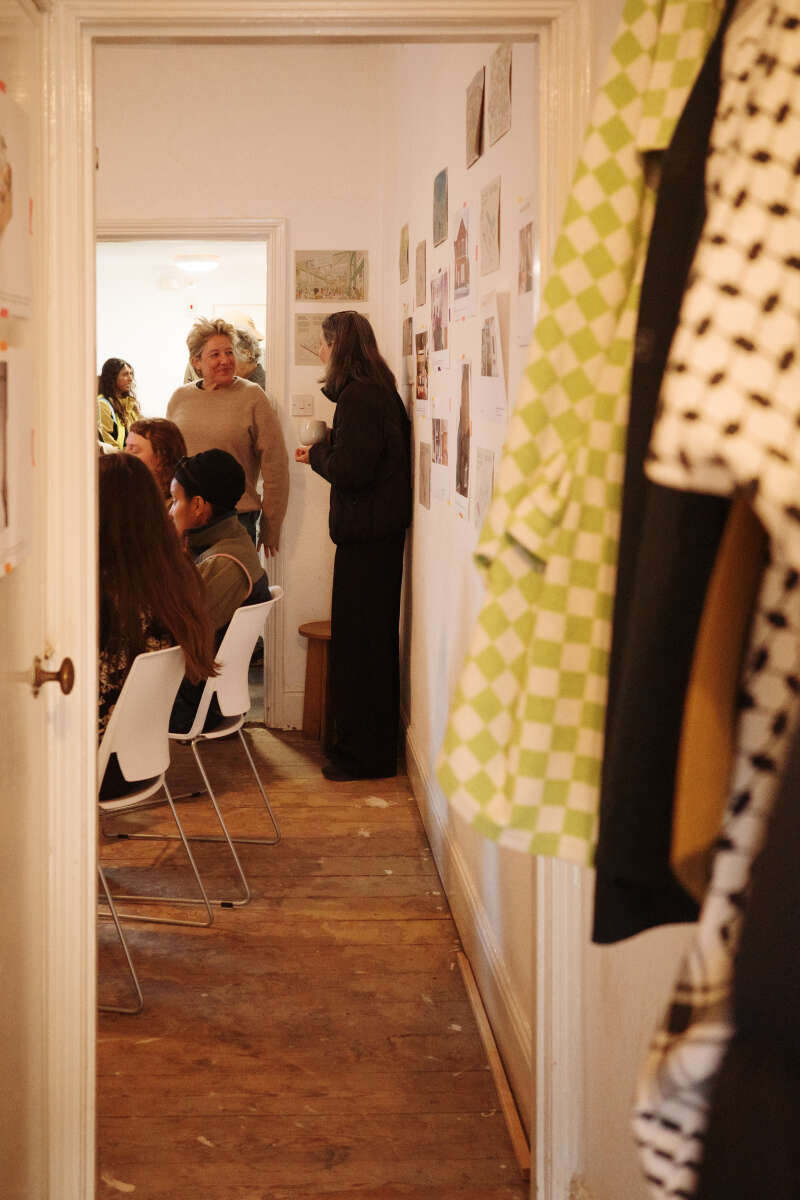
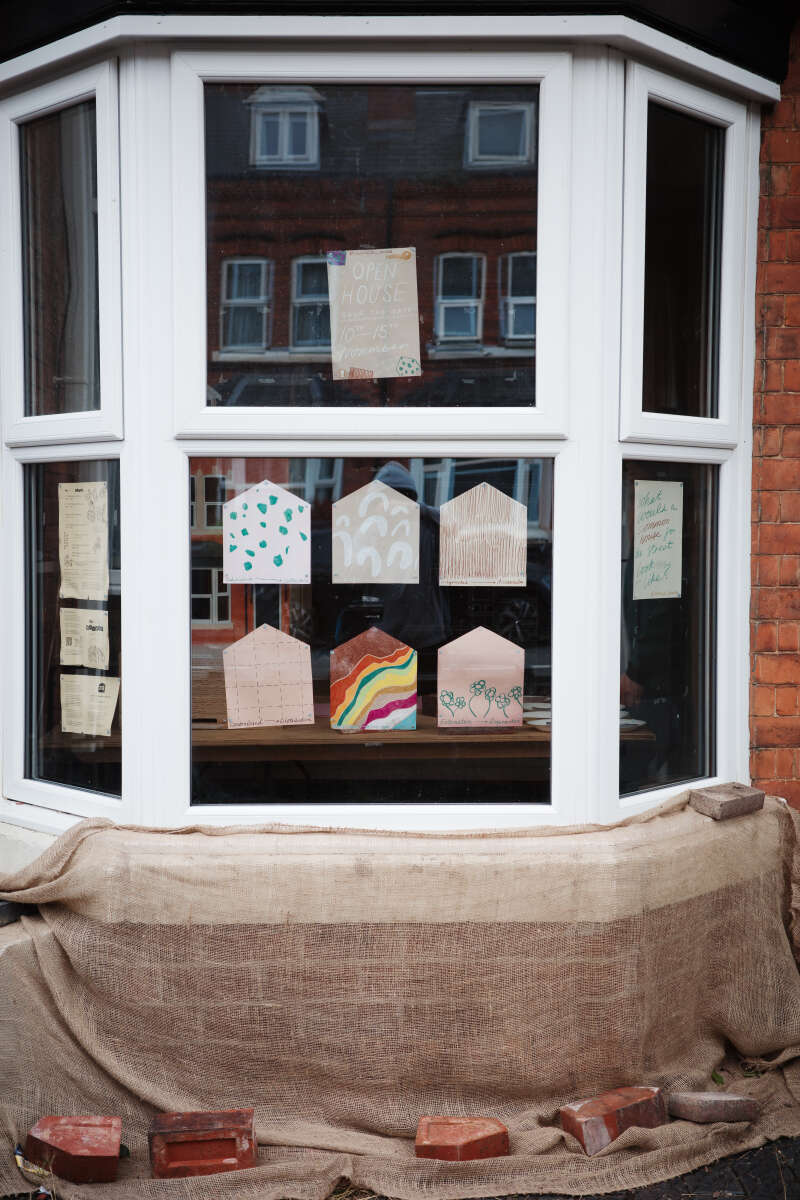 Images courtesy of CIVIC SQUARE
Housing crisis and climate crisis
The scarcity, mould blooms and cold rooms are the product of decisions about land, energy and construction that have stacked up over the decades. The housing crisis is about where we live, how those buildings perform, and who controls them. All three are climate questions as much as they are housing ones. Decades of underinvestment in social housing, right-to-buy sales, speculative development and rising energy costs mean many people are paying more than they can spare to live in homes that actively harm them, locking illness, debt and carbon into the same thin walls.
Every home is a small power station. Heating, cooling, cooking and running appliances make up a huge chunk of emissions. In a leaky terrace, tenants pay more to live in cold, damp rooms while the grid burns more gas. Bad insulation, single glazing, plastic paints and blocked ventilation show up twice: once in people’s bodies as asthma, mould and stress, and once in the atmosphere as carbon. Overheating works the same way. More frequent heatwaves turn badly designed or retrofitted properties into ovens, which then drive demand for cheap AC units that strain the grid and warm the air again. Decisions about land value end up deciding who needs a car, who can walk or take a bus, who lives next to a main road, and who is pushed on to floodplains or overheating upper floors. Climate risk is spatial and so is housing precarity. A proper fabric-first retrofit with natural materials may cost more upfront and give no immediate return if the rent is already as high as the market will bear. Who owns the house, who pays the bill, who breathes the air and who gets to choose the materials all sit on the same fault line.
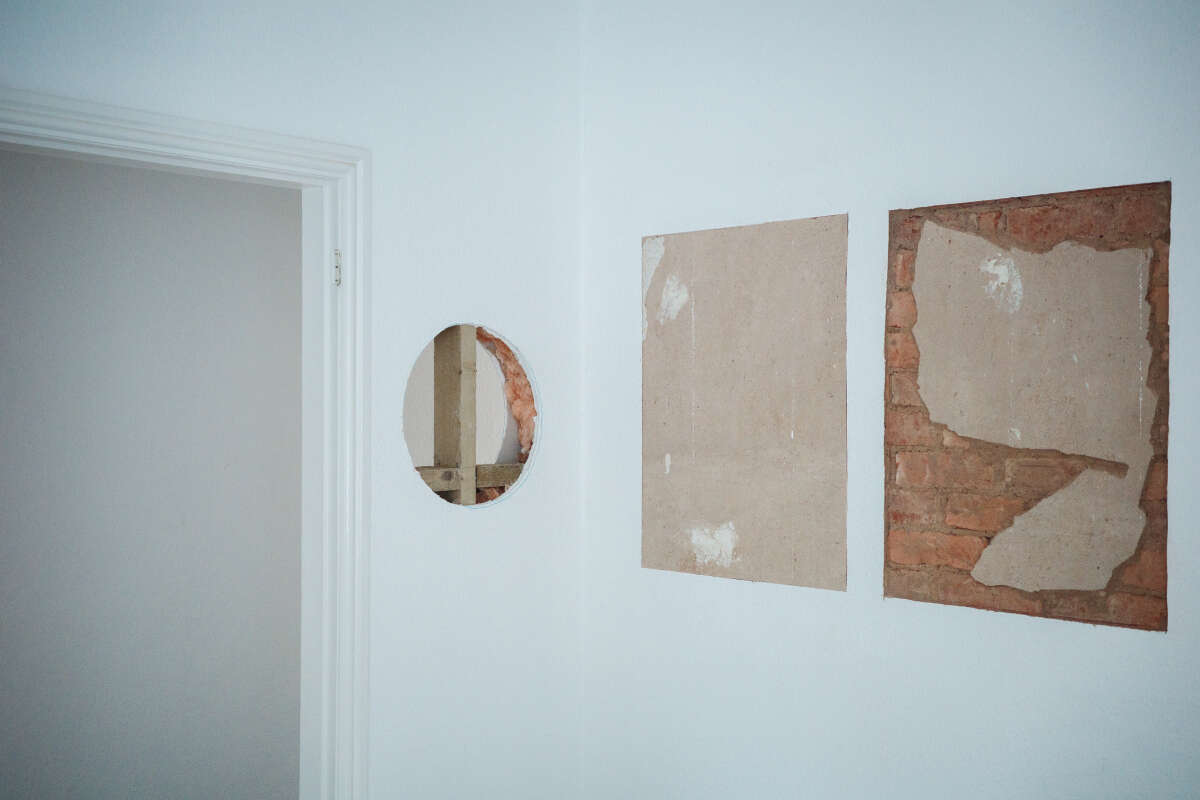 Wall peeled to reveal layers. Image courtesy of CIVIC SQUARE
Retrofit House is answering back to this structure of inequality with natural materials. Summer Islam of Material Cultures describes their approach as a way of “bringing back together architecture and agriculture”, using straw, timber and other plant-based materials grown in nearby fields to build up walls and roofs. She talks about the need to “onshore” production, so that the value and the skills of making these components sit with communities rather than distant factories and extractive supply chains. Clay plasters help buffer humidity in rooms that have known black mould; lime and wood fibre allow walls to breathe instead of trapping moisture behind plastic paints; natural paints laid over these layers keep the whole build-up vapour-open rather than sealing it again. Residents talk about the simple relief of air that does not smell of damp. And here, this is imagined as a collective endeavour.
Neighbours are learning to press clay into corners, to cut insulation without choking dust, to carry materials up narrow stairs, and pay attention to the friendships that form in the gaps between tasks. The work of keeping warm and well becomes something communal rather than a private struggle behind a closed front door. “We’re not bashing people over the head with retrofit or with bio-based materials,” says Immy. “We focus on the process of building healthier homes in healthier streets that are creating jobs and possibility and opportunity for people. And there’s a role for everyone.”
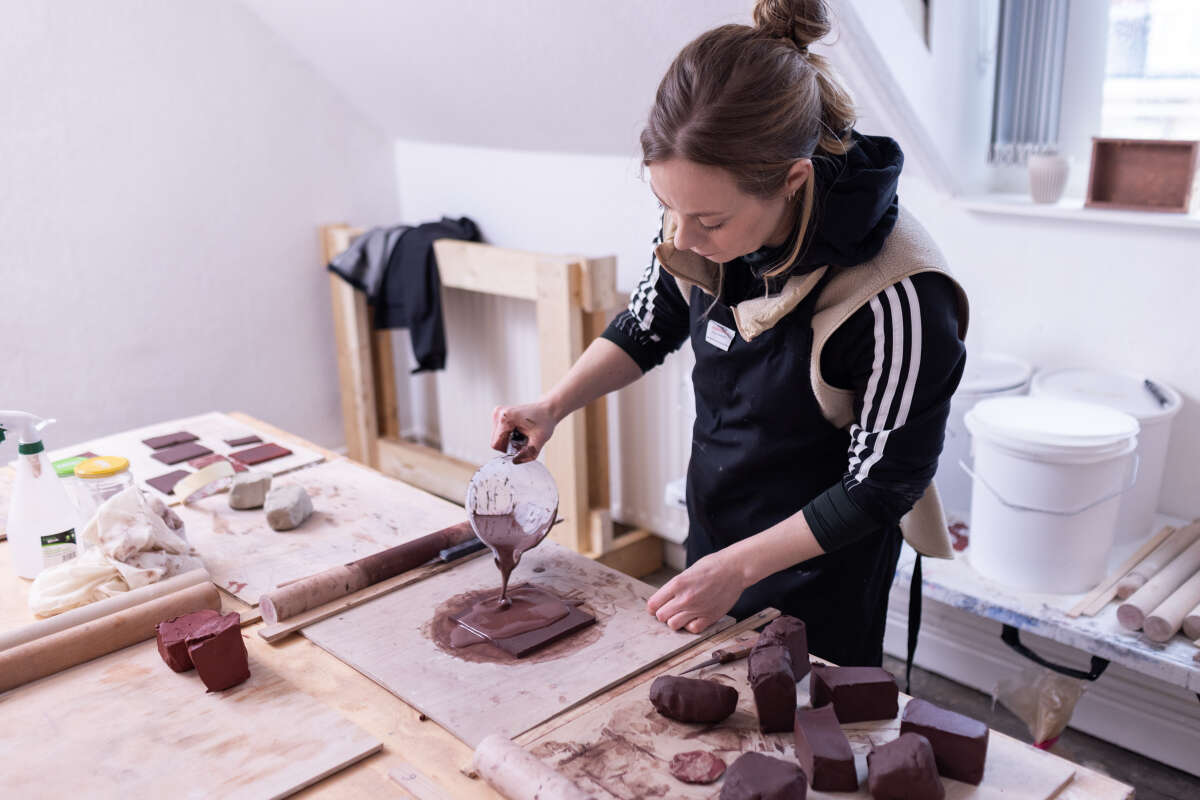 One of the participants working with clay. Image credit, Paul Stringer
Summer describes this work as something other than an effort to make a perfect high-spec show home. For her, “thinking about how you approach retrofit in any town that doesn’t have deep pockets” means a process that is “not entirely focused on building physics” or “centred around performance”, but starts from “what’s practically possible for people to do together and what can be achieved in a really ambitious climate-resilient future.”
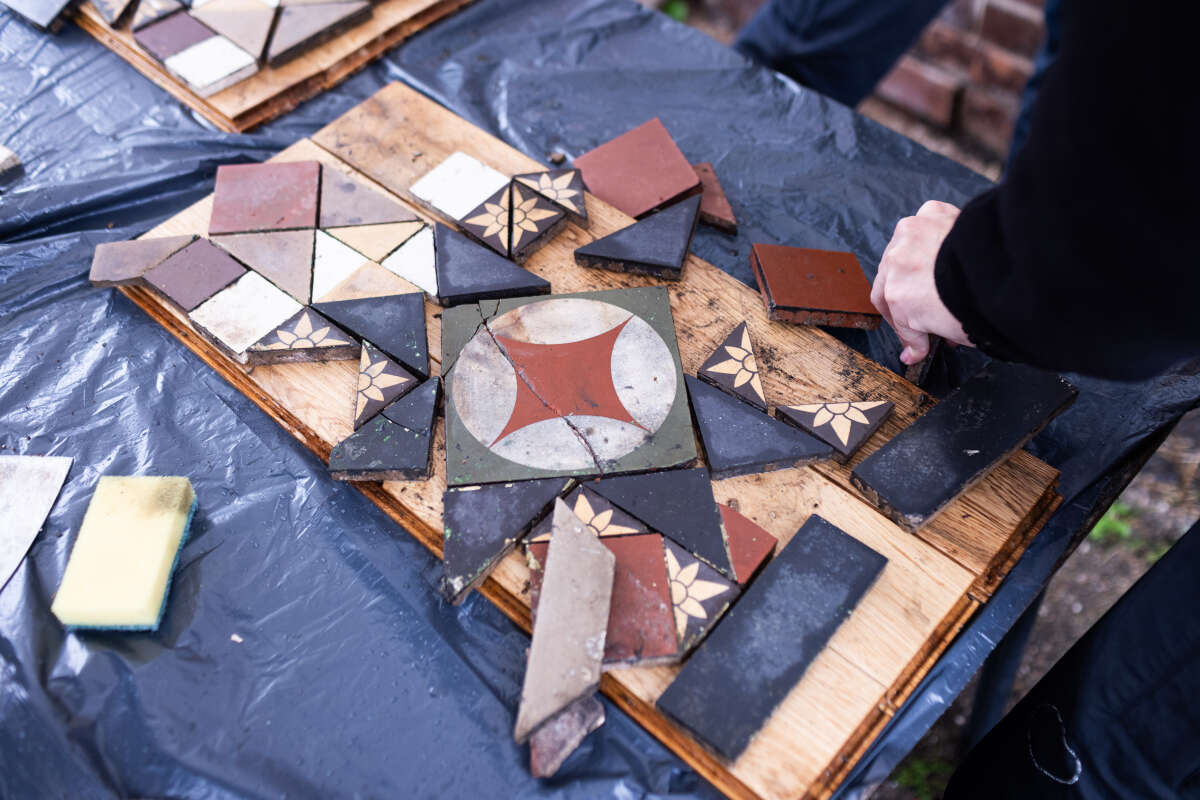 Tile mosaïc. Image credit, Paul Stringer
Retrofit as neighbourhood imagination
Through the Retrofit Reimagined network, Immy has argued that retrofit should be less about “deep technical things” and more about “better quality homes that are better for your health”, and a way to see “the revitalisation of our democracy, of our communities and of our neighbourhoods.” “We hear all the time that communities can’t do that,” she says, “but people here are already doing it, brick by brick, board by board.” If the housing crisis has a texture, so does repair. In Retrofit House the roughness is still visible in cut edges of insulation, patches of clay, timber plates screwed into old brickwork, but it already feels different on the skin and in the lungs. The neighbourhood repairs itself.
Ellen Peirson is an architect and writer based in London.
Author
Ellen Peirson
Published
09 December 2025
© Architextures 2026